
Table of contents
- Why HOA Security in Houston Deserves a Board-Level Conversation
- Courtesy Patrol vs. Standing Guard: Which Coverage Fits Your Community
- Access and Gate Coverage: The Front Door of Your Community
- Protecting Amenities, Common Areas, and Off-Hours
- How to Vet an HOA Security Vendor in Texas
- Documentation: The Board’s Best Defense
- FAQs
A board-level playbook for choosing the right coverage, protecting amenities, and vetting a security vendor that actually delivers.
Why HOA Security in Houston Deserves a Board-Level Conversation
For most Houston community boards, security shows up as a line item long before it shows up as a strategy. Then a string of car break-ins, an after-hours pool incident, or an unauthorized contractor at the gate forces the question: what are we actually paying for, and is it working?
Good HOA security starts with clarity, not a contract. Boards that define their real risks first, then match coverage to those risks, get visible results and fewer surprises at the annual meeting. This guide walks through the decisions that matter most, so you can buy security on purpose instead of in a panic.
Courtesy Patrol vs. Standing Guard: Which Coverage Fits Your Community
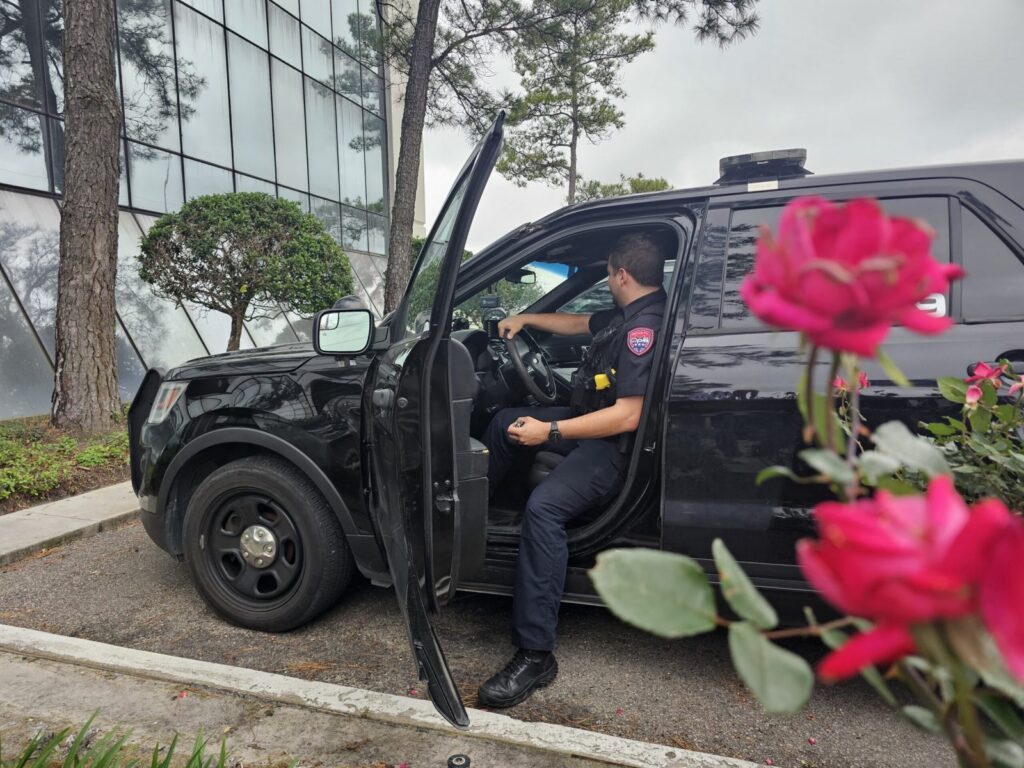
The first fork in the road is coverage model. A courtesy patrol is mobile: a uniformed officer moves through the community on scheduled and randomized rounds, checking common areas, parking, pools, and trouble spots, then documenting each pass. A standing guard holds one fixed post, usually a gate or clubhouse, providing continuous control of a single point.
Most Houston HOAs land on a blend. A patrol covers ground and creates unpredictable visibility across the whole property, while a standing post locks down a busy entrance during peak hours. The right mix depends on your layout, traffic, and where incidents actually cluster.
- Choose courtesy patrol when: the community is spread out, incidents happen in multiple areas, or you need visible deterrence without a full-time post.
- Choose a standing guard when: one gate or amenity sees heavy traffic and needs constant access control and judgment.
- Consider a hybrid when: you have a busy entrance plus large grounds that still need regular coverage.
Access and Gate Coverage: The Front Door of Your Community
For gated communities, the gate is where security succeeds or fails. Cameras and call boxes help, but they do not exercise judgment when a delivery driver, a rideshare, or an unfamiliar contractor pulls up. A trained officer can verify authorization, log contractor and vendor access, issue temporary passes, and turn away anyone whose request does not match community policy.
The goal is consistent, documented entry control, not a guard who simply waves cars through. Op6 builds access coverage around your gate hours, visitor volume, and resident expectations, with GPS-tracked, photo-verified reporting so the board can see exactly who came and went.
Protecting Amenities, Common Areas, and Off-Hours
Pools, clubhouses, gyms, playgrounds, and parking areas are where a community’s risk and liability concentrate, especially after hours. Loitering, after-hours pool use, vandalism, and unauthorized guests are the complaints boards hear most, and they are exactly what consistent patrol presence is built to address.
Patrol rounds timed to your problem windows, paired with clear documentation of each check, give the board a defensible record and residents a visible sense of safety. When something does happen, photo-verified reports turn a vague complaint into actionable detail for management, insurers, or law enforcement.
How to Vet an HOA Security Vendor in Texas
Not every security company that quotes your HOA is equipped to serve it. In Texas, the baseline is licensing: any legitimate provider operates under a Texas DPS Private Security Bureau license, with unarmed officers holding a Level II registration and armed officers a Level III commission. Ask for the numbers and verify them.
Beyond licensing, the difference between vendors is training, accountability, and documentation. Op6 is veteran-owned, founded by a former Houston-area police officer, licensed by the Texas DPS (DPS-RSD License #C26264901), and trains officers up to six times the state-required minimum, including de-escalation, customer service, and scenario drills, with background-vetted officers on every assignment. Community patrols are one part of our security guard service in Houston, TX.
- Confirm Texas DPS licensing and the correct officer commission level (Level II unarmed, Level III armed).
- Ask how officers are trained and vetted beyond the state minimum.
- Require GPS-tracked, photo-verified reporting you can review, not just an invoice.
- Confirm 24/7 dispatch and a defined rapid-response process for emergencies.
- Ask for a site-specific plan built around your community, not a copy-paste schedule.
Documentation: The Board’s Best Defense
Boards answer to residents, insurers, and sometimes attorneys. Documentation is what protects them in all three conversations. Reporting that captures who patrolled, when, where, and what they found turns security from a fuzzy expense into a measurable service the board can stand behind.
Every Op6 assignment includes GPS-tracked, photo-verified reporting and 24/7 dispatch, so your board has a clear record at the next meeting and a fast line to support when minutes matter. That transparency is often the difference between a renewal residents support and one they question.
Key Takeaways
- Define your community’s real risks before choosing coverage, not after an incident.
- Courtesy patrol covers ground and deters; a standing guard controls a busy gate. Many HOAs blend both.
- Gate access control needs human judgment, not just cameras and call boxes.
- Amenities and off-hours are where HOA risk and liability concentrate.
- Vet vendors on Texas DPS licensing, training depth, accountability, and reporting.
- GPS-tracked, photo-verified documentation protects the board with residents, insurers, and attorneys.
Frequently Asked Questions
Does our Houston HOA need armed or unarmed security officers?
It depends on your risk profile. Many communities are well served by unarmed officers for patrol, gate coverage, and amenity monitoring. Higher-risk situations may warrant armed, Level III commissioned officers. Op6 helps boards match the right option to actual community needs during a free assessment.
What is the difference between a courtesy patrol and a standing guard?
A courtesy patrol is mobile, covering common areas, parking, and amenities on scheduled and randomized rounds. A standing guard stays at one fixed post, like a gate, for continuous access control. Many Houston HOAs combine both to cover a busy entrance and the wider community.
How do we know a security vendor is properly licensed in Texas?
Ask for their Texas DPS Private Security Bureau license number and confirm officer commission levels: Level II for unarmed, Level III for armed. Op6 is licensed under DPS-RSD License #C26264901 and is happy to verify credentials before you sign anything.
How quickly can Op6 start covering our community?
Op6 builds a site-specific plan around your gate hours, amenities, and problem areas, then deploys background-vetted officers with GPS-tracked reporting and 24/7 dispatch. Call 832-304-4301 to schedule a free assessment and discuss a timeline for your community.
Ready to put trained, licensed officers on your property? See our Residential Security Services in Houston, TX page or call 832-304-4301 for a free, no-obligation assessment.
Talk to Op6 Security
Get licensed, veteran-led officers matched to your property and your risk — GPS-tracked, photo-verified, and backed by 24/7 dispatch. Free, no-obligation consultation.